18th February 2025
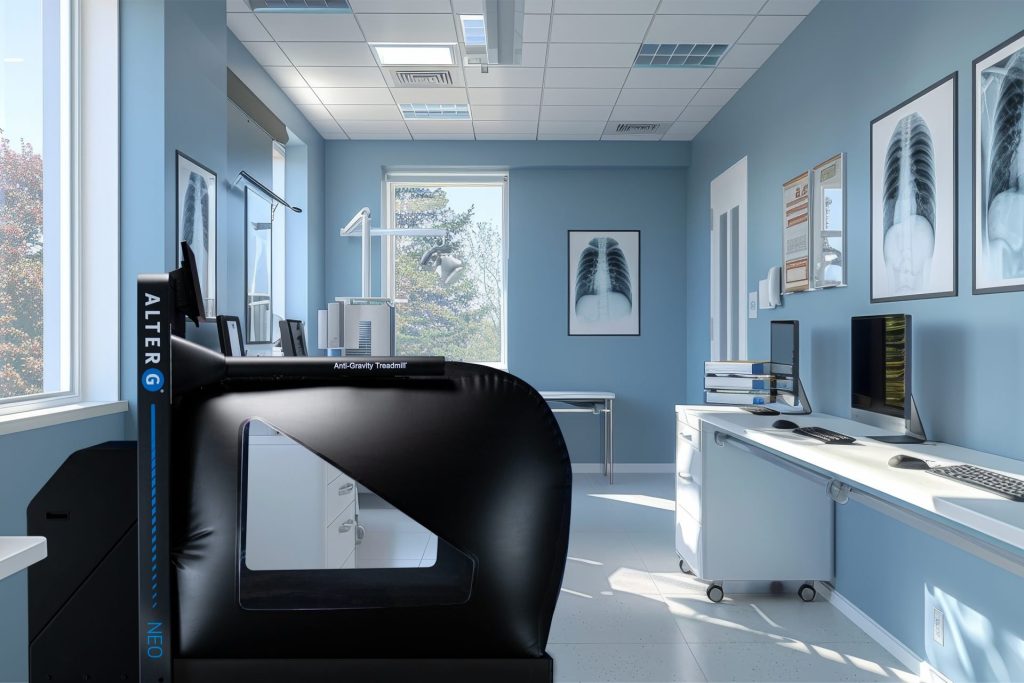
The AlterG treadmill is widely used in rehabilitation beyond just sports recovery. It benefits patients recovering from orthopaedic, neurological, and post-surgical conditions, as well as those managing chronic illnesses. Here’s how it helps in different rehab scenarios:
1. Orthopaedic and Post-Surgical Rehabilitation
- Weight-bearing control: The AlterG allows patients to walk or run with reduced body weight (from 20% to 100% of their body weight). This helps individuals recovering from ACL reconstruction, hip/knee replacement, fractures, or spinal surgeries gradually rebuild strength without excessive joint stress.
- Gait training: Patients can work on restoring their natural walking pattern without compensatory movements that could cause secondary injuries.
- Early mobilisation: Even after major surgeries, patients can start walking sooner than they would on a regular treadmill, reducing muscle atrophy and improving circulation.
Effectiveness of Anti-Gravity Treadmill Exercise After Total Knee Arthroplasty: Protocol for a Randomized Controlled Trial – https://www.researchprotocols.org/2025/1/e59935
The Effect of Anti-Gravity Treadmill on Balance in Acute Phase of Post-Operative Knee Rehabilitation – https://www.researchgate.net/publication/327154051_The_effect_of_anti-gravity_treadmill_on_balance_in_acute_phase_of_post-operative_knee_rehabilitation
2. Neurological Rehabilitation (Stroke, Parkinson’s, Cerebral Palsy, MS)
- Fall prevention: The enclosed chamber provides support and confidence, allowing patients with balance or coordination impairments to practice walking safely.
- Re-learning motor skills: Stroke survivors and patients with conditions like Parkinson’s or multiple sclerosis (MS) can retrain their muscles and nerves with controlled, progressive movement.
- Increased endurance: Helps patients build cardiovascular endurance with minimal fatigue, which is crucial for neuro-recovery
Research progress on the application of anti-gravity treadmill in the rehabilitation of Parkinson’s disease patients: a mini review – https://www.frontiersin.org/journals/neurology/articles/10.3389/fneur.2024.1401256/full
Simulating space walking: a systematic review on anti-gravity technology in neurorehabilitation – https://jneuroengrehab.biomedcentral.com/articles/10.1186/s12984-024-01449-z?utm_source=chatgpt.com
3. Weight Management and Obesity-Related Conditions
- For individuals with obesity or joint pain from conditions like arthritis, the AlterG provides a way to exercise without excessive strain on the knees, hips, and spine.
- It allows for longer workouts with less fatigue, promoting weight loss and cardiovascular health.
Simulated weight reduction using an anti-gravity treadmill – A pilot study of the impact of weight loss on foot and ankle arthritis – https://pubmed.ncbi.nlm.nih.gov/33218904/
4. Elderly and Fall Prevention Programs
- Reduces the risk of falls while allowing safe gait retraining.
- Encourages confidence in walking, leading to improved daily mobility.
- Helps prevent deconditioning in seniors who have been inactive due to injury or fear of falling.
5. Paediatric Rehabilitation
- Helps children with cerebral palsy, muscular dystrophy, or developmental delays practice walking in a safe, supported environment.
- Reduces stress on underdeveloped or weak muscles while allowing for movement repetition.
Therapeutic effects of anti-gravity treadmill (AlterG) training on reflex hyper-excitability, corticospinal tract activities, and muscle stiffness in children with cerebral palsy – https://pubmed.ncbi.nlm.nih.gov/28813867/
Key Benefits Across All Rehab Fields
- Reduces impact on joints and muscles
- Encourages early mobility and faster recovery
- Improves confidence and reduces fall risk
- Customisable for different weight levels and speeds
- Enhances cardiovascular fitness without excessive strain
6. Cancer
The AlterG treadmill can be a valuable tool for cancer rehabilitation, helping patients regain strength, endurance, and mobility while minimising stress on the body. Cancer and its treatments—such as chemotherapy, radiotherapy, and surgery—often lead to fatigue, muscle weakness, neuropathy, joint pain, and balance issues. The AlterG can address these challenges in several ways:
1. Managing Cancer-Related Fatigue (CRF)
- Many cancer patients experience severe fatigue, making it difficult to stay active.
- The body weight support feature allows patients to walk or run at a lower intensity, reducing strain and enabling longer, more consistent exercise sessions.
2. Joint Pain and Bone Health Support
- Some cancer treatments (such as hormone therapy for breast or prostate cancer) cause joint pain, osteoporosis, or muscle weakness.
- The AlterG allows for low-impact movement, reducing stress on fragile bones and joints while still promoting weight-bearing activity, which is essential for bone density maintenance.
3. Neuropathy and Balance Training
- Chemotherapy-induced peripheral neuropathy can cause numbness and tingling in the feet, increasing the risk of falls and instability.
- The enclosed air chamber provides fall protection, allowing patients to regain confidence in walking without the fear of injury.
- It also helps with gait retraining, especially after long periods of inactivity or muscle deconditioning.
4. Post-Surgical Rehabilitation
- Many cancer patients undergo surgeries such as mastectomies, tumour resections, or limb amputations, which can impact mobility.
- The AlterG allows for early mobilisation with reduced stress on healing tissues, preventing complications such as muscle atrophy, blood clots, and scar tissue stiffness.
5. Cardiovascular and Pulmonary Benefits
- Cancer treatments can weaken the heart and lungs, making traditional exercise difficult.
- The AlterG provides a gradual and controlled way to improve cardiovascular fitness without overloading the body.
- It’s especially beneficial for patients with lung cancer, lymphoma, or those undergoing stem cell transplants who need to rebuild endurance carefully.
6. Mental Health and Well-Being
- Exercise is proven to reduce anxiety, depression, and cognitive fog (“chemo brain”) in cancer patients.
- The AlterG provides a safe and motivating way to stay active, which can improve mood and overall quality of life.
Key Benefits Across All Rehab Fields
- Breast cancer survivors dealing with fatigue, joint pain, and lymphoedema.
- Prostate cancer patients experiencing muscle loss from hormone therapy.
- Lung cancer patients rebuilding lung function after surgery or radiotherapy.
- Leukaemia and lymphoma patients recovering from stem cell transplants.
- Sarcoma or bone cancer patients regaining mobility after limb-saving surgeries.